The IT band is one of many pieces of anatomy that will randomly get singled out and blamed as a culprit for knee pain and tight hips, but it’s really just a dense piece of connective tissue that’s at the mercy of all the musculature it attaches to or is associated with. I usually view it as the friend in the group that is too slow to get away from the cops. It didn’t start the trouble, but it was front and center when the cop turns his lights on.
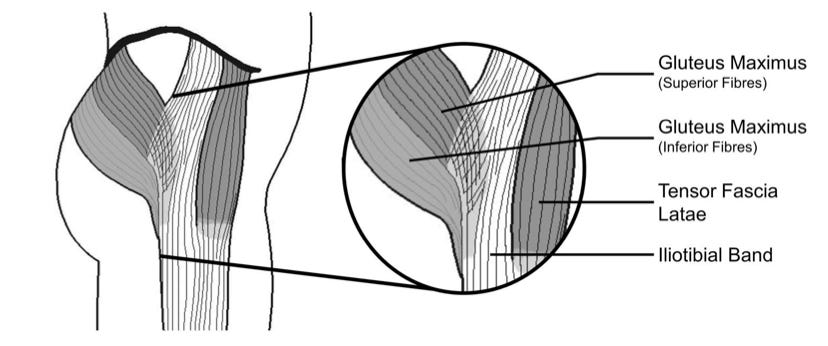
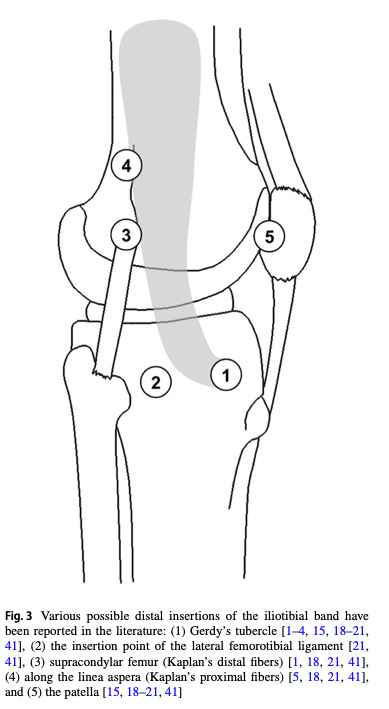
Tensor Fascia Latae and the superior fibers of glute max will attach into the proximal portion, the actual “band“ it’s self is a thickening of the fascia and muscular septum that runs over the quadriceps, and attaches to the many parts of the lateral aspect of the tibia, most notably Gerdy’s Tubercle. Meaning increased concentric orientation of the TFL and upper glute max will be able to externally rotate the tibia (and flex the knee depending on the position), bring the pelvis forward into an anterior orientation, as well as bring the iliac crest down towards the greater trochanter.
Individuals with limited Hip ER, Hip Extension, and tibial IR will likely have concentric orientation of the muscles attaching proximally. The above technique isn’t trying to “stretch“ the IT band, but looks to influence the muscles and the associated joint position by working both ends, attempting to insure maximal influence on all the muscles involved. Reduced concentric activity will reduce tension and associated stiffness of the connective tissue.
Like I said, we can pick on the IT band, but other muscles will also create these limitations as well, directly under the IT band is a vastus lateralis and biceps femoris that will also limit tibial IR, putting more pieces together in your assessment is always necessary to see which one has more influence on the given situation.