


This “technique of the week” segment has kind of turned into the “technique when I can get around to it” segment, so I guess consider them a nice treat when I have time to make them.
In this segment I go over a technique to help create some eccentric orientation through an adductor group that is stalling someone’s ability to re-capture some motion.
Clinical signs that would hint towards utilizing something like this would be someone with a global loss of Er on this side (hip ER at 90, flexion, abduction) pain or limitation in a FABER test, clinical signs or imaging demonstrating hip impingement, or a patient demonstrating a coxa vara shape change of the femoral head and trochanter.
I have also had success with this intervention with patients suffering from hip osteoarthritis. Which presents as narrowing joint space and increased joint compression, the adductor group having a great mechanical advantage to compress the femoral head into the acetabulum.
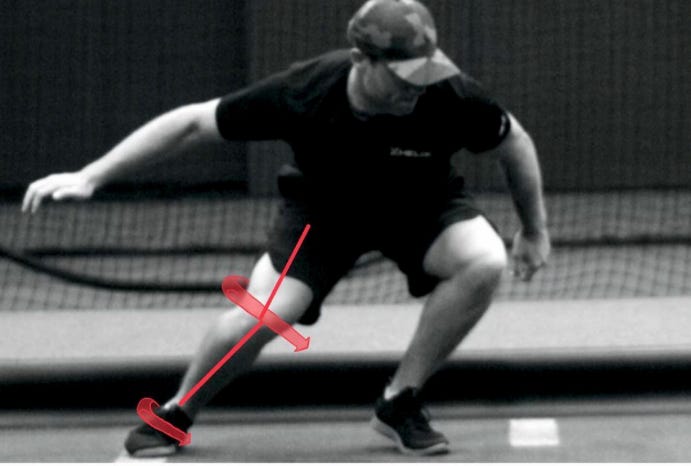
Dynamically in athletic movement you’ll likely see a valgus or IR orientation of the knee and distal femur in moments of high force production, pushing up out of the bottom of a squat, pushing out of a cut. In pitching you’ll often see this at peak force production on the backside leg. The knee drops down to the ground increasing vertical and rotational forces, but leading to a reduction in lateral forces.
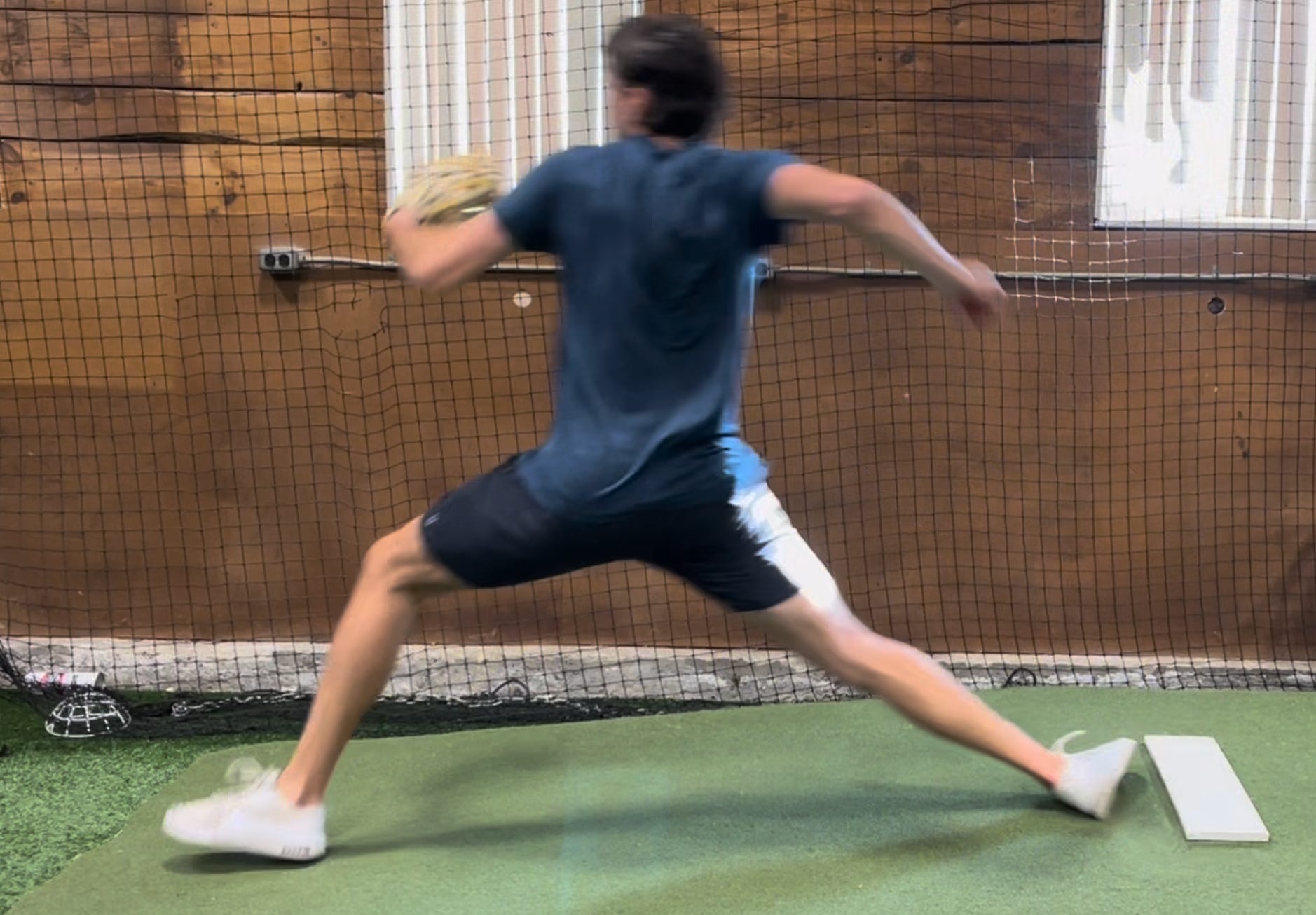
For this technique you want to use an elbow to apply pressure to the area to encourage a phase transition in the muscle, simply meaning to alter the muscle behavior from concentric to eccentric. At the same time the individual is using the opposite leg and foot contacts to encourage an ipsilateral rotation of the pelvis and sacrum in the opposite direction. This enables further eccentric orientation at the proximal attachment of the pelvis, and a reduction of the pressure on the anterior aspect of the pelvis. Maintaining this position while performing deep breathing enables the pressure gradient of the pelvis to continue to shift in that direction. Have at it!
-Campo


